17/09/2015
The Douro valley is where it all started. As early as the 12th century, wines were shipped to England from this region. Already then, there was a very long history of wine making in Portugal. It seems that it was the monastery of Lamego who first ventured into the port business. Whilst the process of fortifying wine had been known for some time, these guys were doing it during the fermentation process, and not after. This caused the fermentation to stop earlier, resulting in a wine that had a high alcohol content, but noticeable levels of sweetness. The English discovered this in 1678, and loved it, thus helping the Portuguese a little in starting their port wine industry.
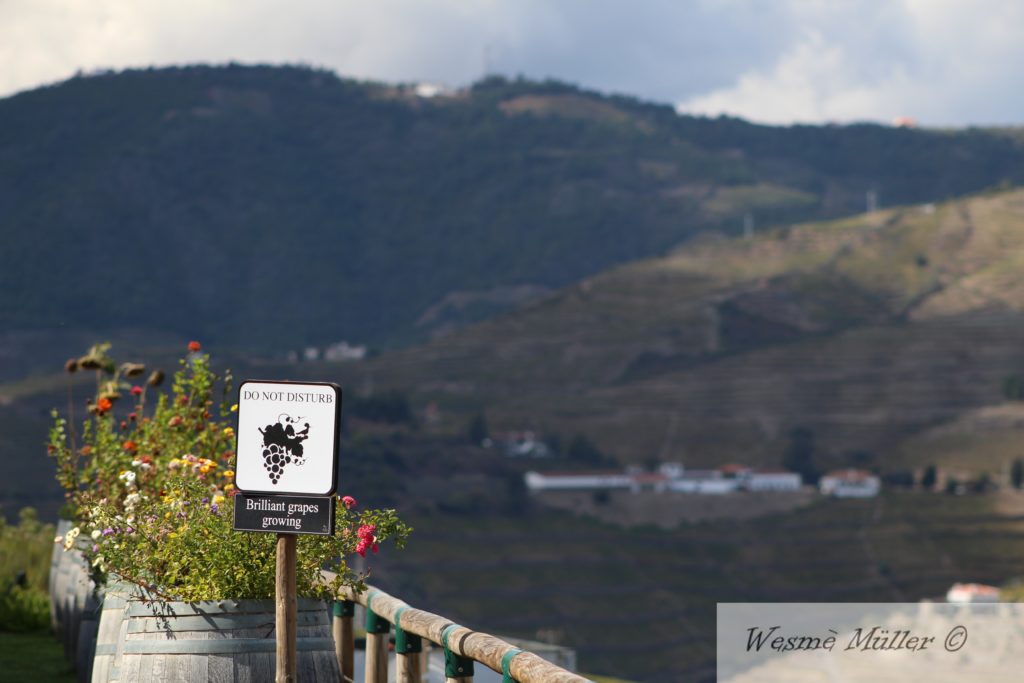
From Porto, we drove to Vila Real, and then headed South towards the magnificent Douro river. A narrow road leads along the the southern bank of the river, towards Pinhão. It can only be a narrow road, because of the continuous surrounding hills, marked with almost unfathomable vineyards, quintas and villages.


It is difficult to know at which quinta to stop, so we had to rely on the luck of the draw. Our first quinta was very busy with their harvesting process. So much so that the tractor and trailer collecting the harvest, prevented us from continuing down the narrow road in search of the tasting room, so we awkwardly reversed ourselves back to the road, and continued on a little.
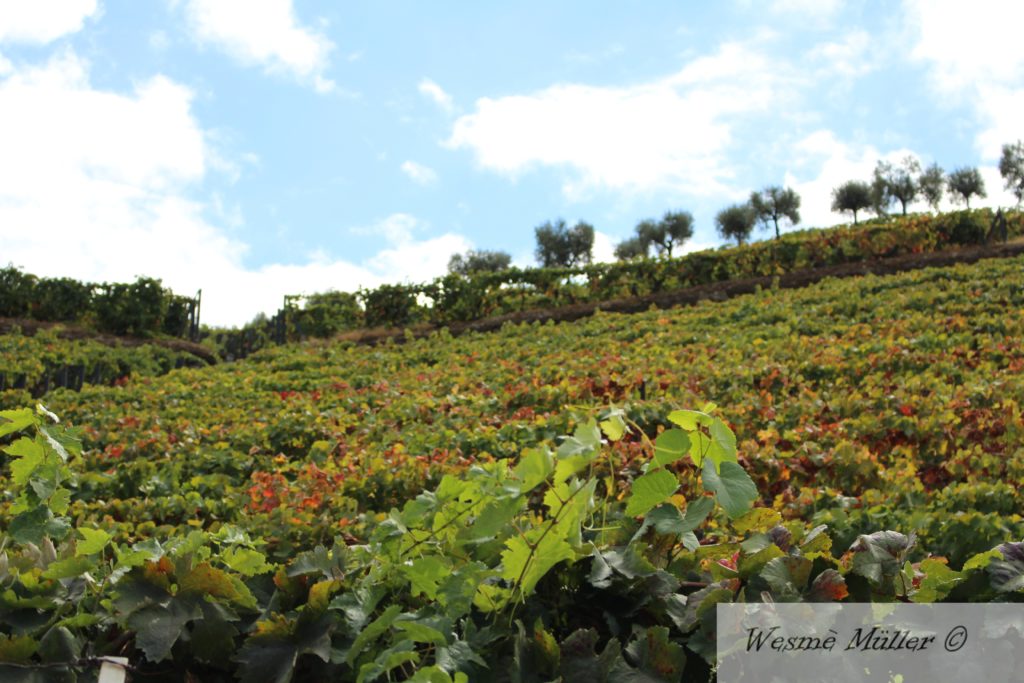
At Quinta do Tedo we had more luck. Niel managed to taste some of what they refer to as “still” wines – the normal read wines, as well as some port. The quinta is owned by the son of a known Burgundy family, which takes a little away from a truly authentic experience. We did however learn a great deal of the industry. Many of the vineyards make normal red wines, along with the port. The split is usually about 60% port, to 40% red wine, although that varies, depending on the quality of the harvest, and stock levels. If the regulatory bodies believe there is too much stock on the market, they force the quintas to produce less port.


It was at Quinta do Pôpa that we experienced the true spirit of the Douro. Their website sums it up nicely. Wines of Tribute. That is what Quinta do Pôpa is about. The owner of this lovely quinta always dreamed that, one day, he would own a quinta in the Douro valley. As a young boy, he worked in the vineyards alongside his father, who, despite the strenuous work in the steep vineyards, always had his hair combed immaculately into an Elvis-like hairstyle, known as a pôpa (also the Portuguese name for the Hoopoe). This small quinta only focuses on normal red wines. Their wines have a complexity, largely contributed by the variety of cultivars used. There are 5 cultivars, known as the noble cultivars. These are
- Tinta Amarela
- Tinto Cão
- Touriga Franca
- Tinta Roriz
- Touriga Nacional
It is a blend of these noble cultivars that make up the largest percentage of their wines. But included in the blend, is a small percentage of grapes that come from their oldest vineyard. In the case of Quinta do Pôpa, this vineyard is 80 years old, and because the farmers at the time had different beliefs around how vines should be planted, the vineyard contains over 20 different cultivars, all mixed up. It is a bit like a pre-blended vineyard.


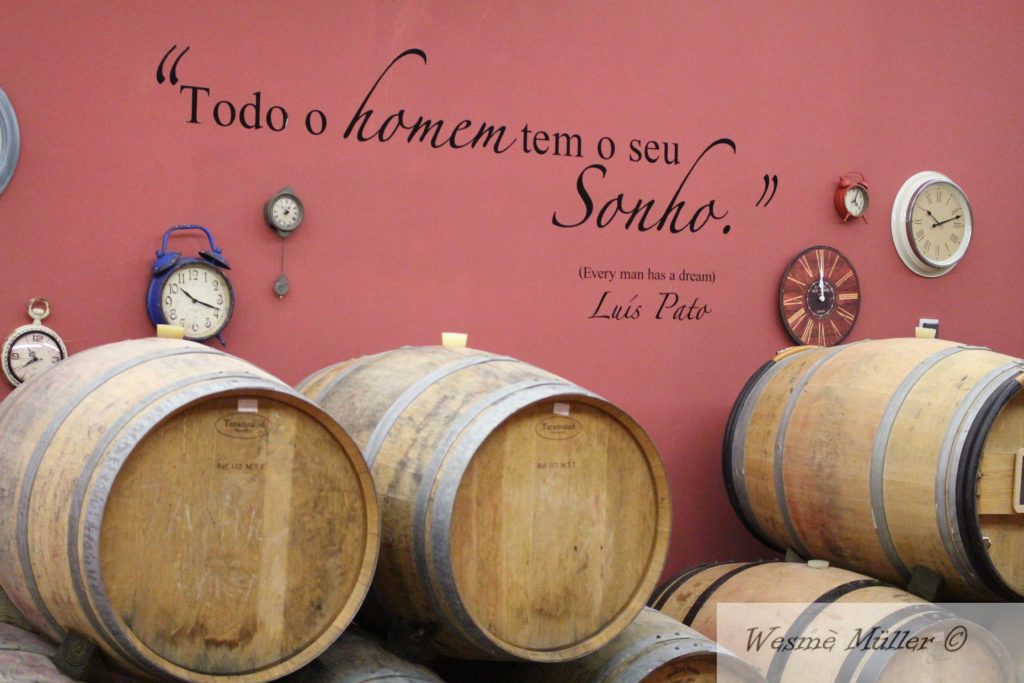

After a tour of this lovely quinta, we decided that it would probably be best to head back to Porto.
We really can compliment the Portuguese on their road-building as well as driving capabilities. The freeway between Porto and the Douro valley is still in the process of being built, but constitutes impressive bridges that span the many deep valleys. And as for their driving – we seldom feel like they become impatient with our less experienced driving on some of the narrow roads, and always politely make room for last-minute lane-changing.
Supper was at a lovely restaurant with a great concept. They ask what you don’t eat, they ask what you drink, and then they just keep on bringing tapas until you plead for them to stop.
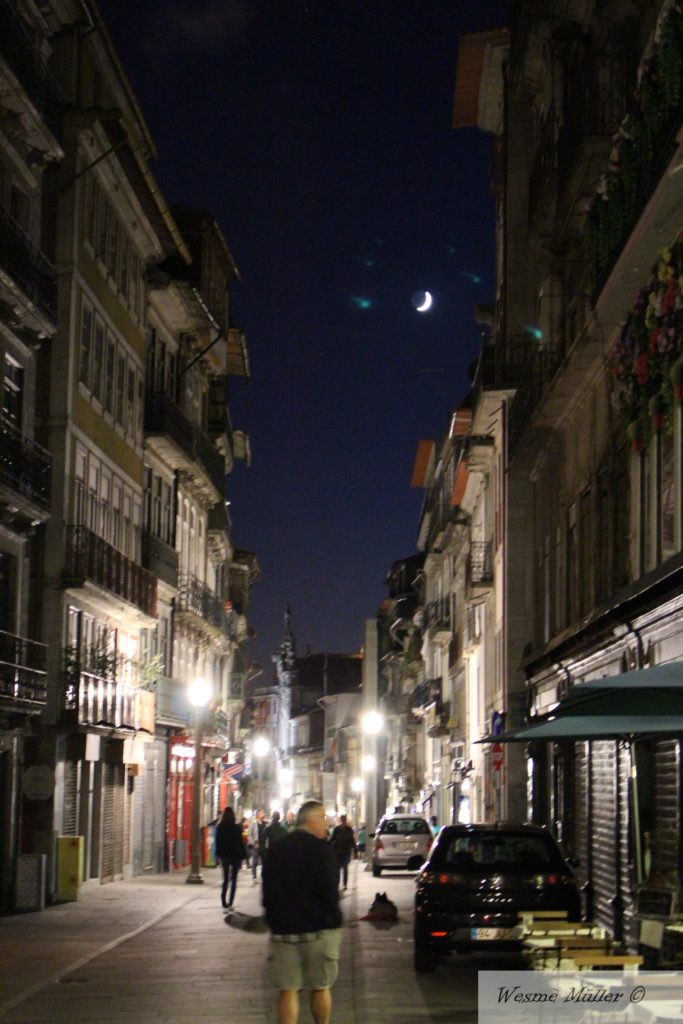

We always seem to over-compensate for the potential calories that may get burnt during the walk home.

